
Scioto Township Previous Residents by Era
Layer the work. A current parcel supplies the parcel number and the legal description. It also offers a clue to the last conveyance. From there the Recorder supplies the recorded party trail. The chain may reach material beyond the online system. At that point the Records Center, the Cryder Research Library, and the District Library become the practical route. A deed proves a transfer happened. It cannot name every person who lived at the property.
Keep property evidence and household evidence separate in your notes. Use the source that fits the date. Then preserve its page, volume, instrument, or reel reference. That way the next connection can be checked.
| Source | Years it covers | Where held | What it contributes |
|---|---|---|---|
| Recorder real-estate web index | 1990-present | Recorder Public Access | Recent instruments searchable by party, book and page, or instrument. |
| Recorder and archival deed route | Before 1990 | Recorder exam room and Records Center | Earlier deed books and indexes when a web result stops. |
| Mendenhall Files | 1800-1891 | Cryder Research Library | Delaware County property-transfer leads. |
| Digitized Delaware directories | 1859-1922, eleven volumes | Ohio Memory and Historical Society | Dated city or county address, trade, and business material depending on volume. |
| Federal census | Through 1950 publicly released | NARA and library databases | Household composition at the census date. |
| Local newspaper microfilm | 1821 to today | District Library | Obituaries, social notices, legal notices, and dated local context. |
Begin in the era nearest your question. A recent transfer usually starts with the parcel and the Recorder record. A nineteenth-century puzzle may open instead with the Mendenhall Files, an atlas, tax material, or a directory scan. From that starting point, move to the matching deed and household evidence.
Trace Scioto Township Previous Residents by Deed
For a known address, start with the Delaware County Auditor or Treasurer. Record the parcel number. Add the situs address, the legal description or map context, and the last conveyance date. The GIS parcel view adds boundary, road, plat, and survey context. These identifiers beat a surname alone. Nearby lots, common names, and changed mailing labels can make two trails look nearly identical.
In Recorder Public Access, search the current recorded party. Match the role to the transaction. Deeds use grantor and grantee searches. Open the instrument itself. Compare its date, legal description, and parcel reference. Check the book or page and instrument number before stepping backward. Remember that the Recorder's name index is not an address index.
- Find the address in the Auditor or Treasurer search and write down the parcel number, legal description, and latest conveyance clue.
- Open the GIS parcel and, when helpful, use Subdivisions or Survey Points to reach a linked plat or survey reference.
- Search the most recent grantee or grantor in Recorder Public Access and save the instrument number or book and page.
- From the prior conveyance, search the earlier party in the opposite role and compare the legal description at every transfer.
- At the online boundary, take the volume, party, parcel, and legal-description details to the Recorder exam room, Records Center, or Cryder collection.
- Grantor and grantee
- The grantor transfers an interest in the document; the grantee receives it. The roles are the Recorder's deed-search vocabulary.
- Chain of title
- A sequence of recorded transfers for the same property, checked one instrument at a time.
- Legal description
- The land description used in recorded documents. It can remain more reliable than a street address in older work.
- Situs address
- The property location shown in a parcel record. It differs from an owner's mailing address when the card shows another delivery address.
Scioto Township Previous Residents After 1990
Real-estate documents from 1990 to the present are online, according to the Recorder. That is a web-access boundary, not a promise. Not every older event is unavailable, and not every later document is fully imaged. Document data updates about every five minutes. But the Recorder warns that some post-1990 documents were never computerized. Imaging begins at different dates depending on document type. Plan for gaps.
Use the Recorder's recorded-document search information for the public portal and its grantor-grantee mechanics. A search may hit the boundary, or an image may be absent. Then visit the Recorder exam room at 145 North Union Street on weekdays from 8:30 to 4:30. Recordings close at 4:30, and document submission closes at 4:00. A tightly defined request can also go to the archival route. For a defined instrument, the Recorder's published fees and copy information explains the counter-copy route.
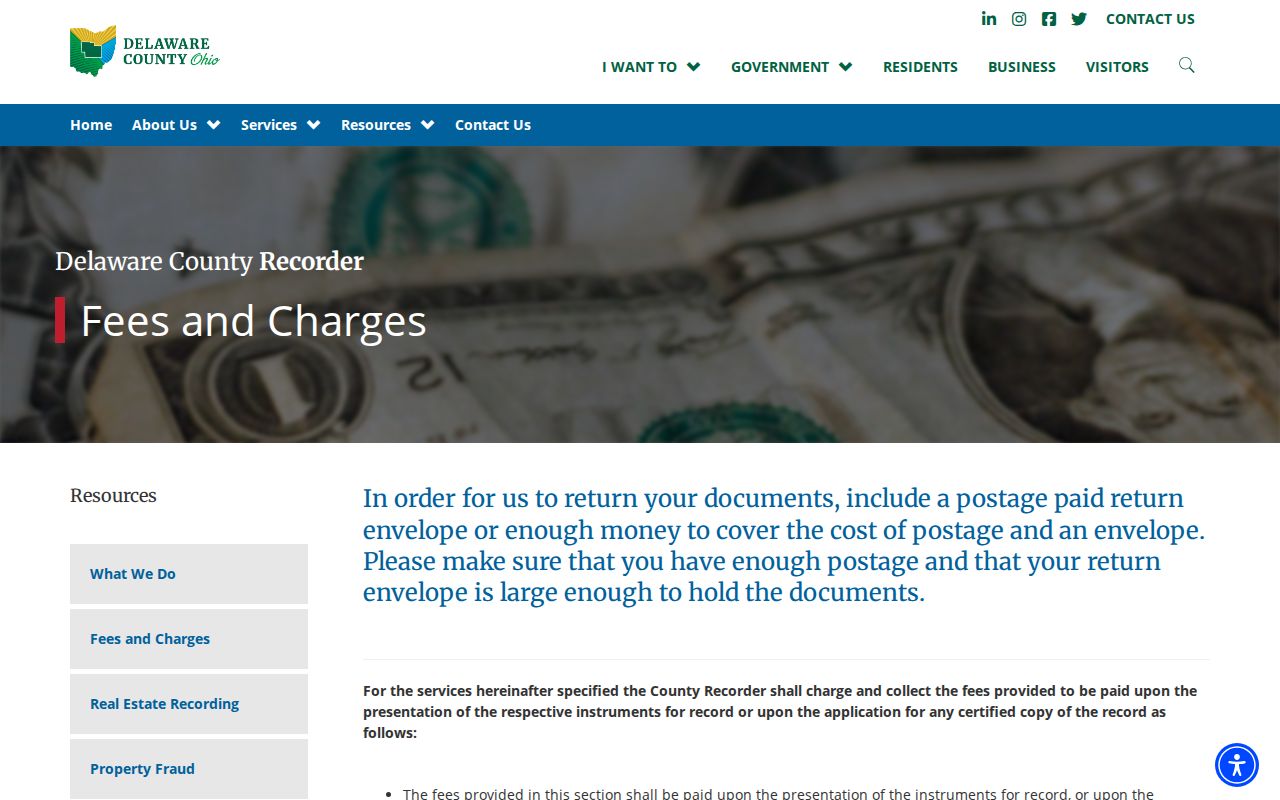
The published base recording charge for a deed, mortgage, or similar instrument is $39 for the first two pages. Each additional page costs $8. Photocopies run $2 per page. Certified copies are $2 per page plus a $2 certificate. Give an instrument number or book and page when requesting a certified copy. Confirm the current amount first.
Note: The best counter request names a document type, person or parcel clue, and a date range. It also states the copy or inspection needed.
Scioto Township Previous Residents Before 1891
Cryder Research Library's Mendenhall Files cover Delaware County property transfers from 1800 through 1891. They bridge the gap when a deed chain moves into the pre-web era. Treat a transfer-file result as a lead. Compare it against deeds, maps, probate, and household records. Do this before concluding who occupied a farm or home.
Cryder also holds county newspapers, obituary archives, maps and atlases, rural-route directories, and local yearbooks. Hours are Sunday 2-5 and Wednesday 10-noon and 1-5, with other times by appointment. Ask for a narrow item. A surname, a legal description, a time period, or a directory type all work. The direct librarian contact is 740-369-3831 ext. 2. The Cryder Research Library collection identifies the Mendenhall Files and companion material. It is an on-site research channel, not an online house-history service.
Pair Scioto Township Previous Residents With Census
Once a property transition is established, turn to household evidence. The digitized Delaware volumes can yield a name and address. They can also yield an occupation, business, or county listing for a given date. Federal censuses then offer a household snapshot at the released enumeration date. Newspaper microfilm and obituaries can test a move or a death. Probate material and cemetery contacts can test a family relationship between those dates.
No township reverse-directory run is known to exist. Do not assume a street-ordered list survives for the date being researched. The historical collections are described in the Scioto Township city directory. For each person, record the role of the evidence. It may be a directory observation, census household, recorded party, obituary subject, or cemetery lead. Those roles should not be collapsed into one claim.
- Match the deed or parcel date to the closest available directory volume or county listing.
- Copy the printed spelling and place label, including Ostrander or rural-route wording when present.
- Compare the result with the nearest released federal census and record every source's date.
- Use newspaper, probate, obituary, or cemetery material to test a gap between observations.
- Return to the property chain only after a household clue points to a specific time or person.
Lawful use. Use past-household material for family history, estate research, and a property's historical context. Do not use it to stalk, harass, or harm a living person.
Scioto Township Previous Residents on Maps
Much of old Scioto Township sits in the Virginia Military Land. Descriptions there trace rivers, creeks, and irregular tracts instead of a tidy grid. Before digging into an old map, transfer file, or deed book, take one step first. Match the modern street address to the parcel's legal description. The pairing saves hours.
When an address refuses to line up, climb the ladder in order. Start with the GIS parcel and its current legal description. Then move through the Recorder instrument and plat. After that come GIS Subdivision or Survey Points, county road books, and the county atlas sequence for 1849, 1866, 1875, and 1908. The Records Center holds county road record books spanning 1808 through 1941. That climb beats guessing a road number or name never changed.
Scioto Township publishes no house-history service or local renumbering project. Ask the Records Center, Historical Society, zoning office, or GIS staff for an old map, road record, or historic address clue. Do this whenever the pieces will not match.
Scioto Township Previous Residents Archive Route
The Delaware County Records Center anchors the archive end of any Scioto Township past-resident search. Its shelves hold historical tax lists, marriage and vital records, probate files, court papers, naturalization records, road records, Recorder material, maps, and cemetery files. The public research room sits at 2079 U.S. 23 North. Hours are weekdays, 8:00 to 4:30, and the phone is 740-833-2140.
Mail requests work best when the record group is already known. Staff can help with a specific question. The request form requires payment plus a self-addressed stamped envelope, and it accepts cash, check, or money order made out to the Delaware County Records Center. For deeper genealogy work, the form points to the Genealogical Society or Historical Society. Name the person, parcel, legal-description clue, date range, record type, and copy type you want.
The Delaware County Records Center offers the archive contact route, and its record-request form spells out the mail channel. A narrow, well-detailed request beats a broad sweep for everyone tied to one address.
Scioto Township Previous Residents Trail Endpoints
Some Scioto Township trails stop at an event record instead of another deed. County marriage records reach back to 1835. They are split by date between the Records Center and Probate Court. Probate material from 1850 through 1950 travels the Records Center's historical route. Later files stay at Probate. Estate and family papers can strengthen a connection. Still, they cannot pin a person to one address without a dated address source.
The township keeps four cemeteries: Fairview, Mill Creek, Newhouse, and Bokes Creek. No public online interment index exists for them. Ask the township trustees or the sexton about a specific lot or burial. A cemetery record, an obituary, and a property transfer make a strong final comparison. Matched together, all three should name the same family in the same era.
Reconstruct past residents one dated source at a time. Track the parcel number and legal description. Add the instrument citation, directory page, census year, and archive request reference as one bundle. That trail keeps the useful links intact. It also shows the honest limits of the evidence.